
10. April 2026
The Dirty Truth About Your Beauty Bar
Skincare Education · Ingredients
The Dirty Truth About
Your Beauty Bar
What's really in that bar of soap — and what it's doing to your skin every single day.
BY BUBBLES@BEYONDSUDS 4/9/26
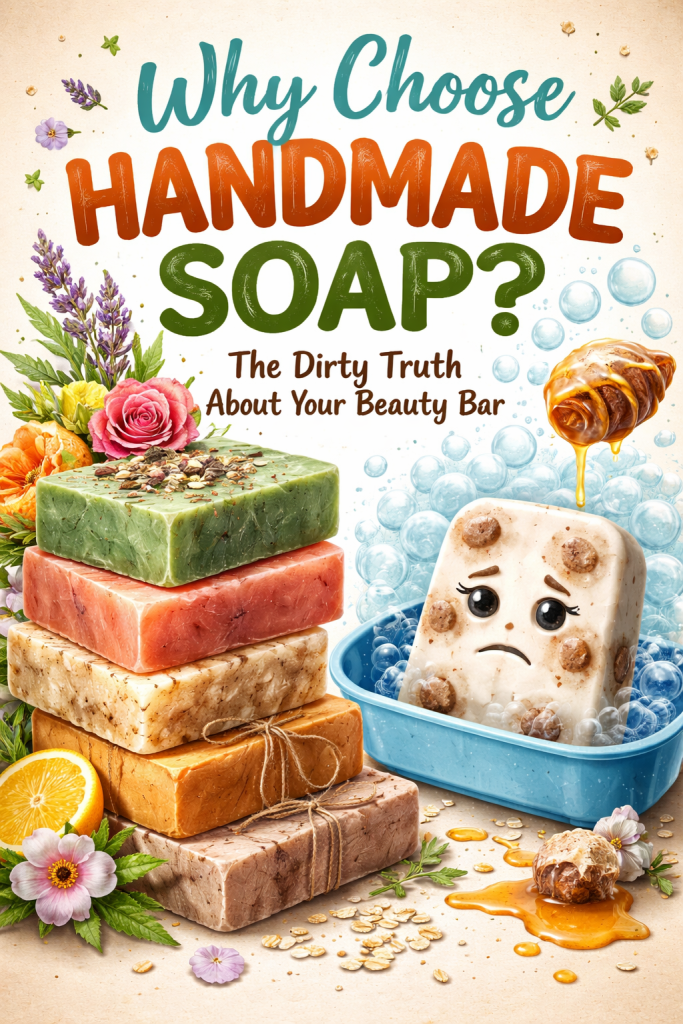
You wash your face and body with it every single day. You trust it to clean you. But what if that bar of soap — the one that's been sitting in your shower for months, the one with the fresh scent and the satisfying lather — was quietly working against your skin the entire time?

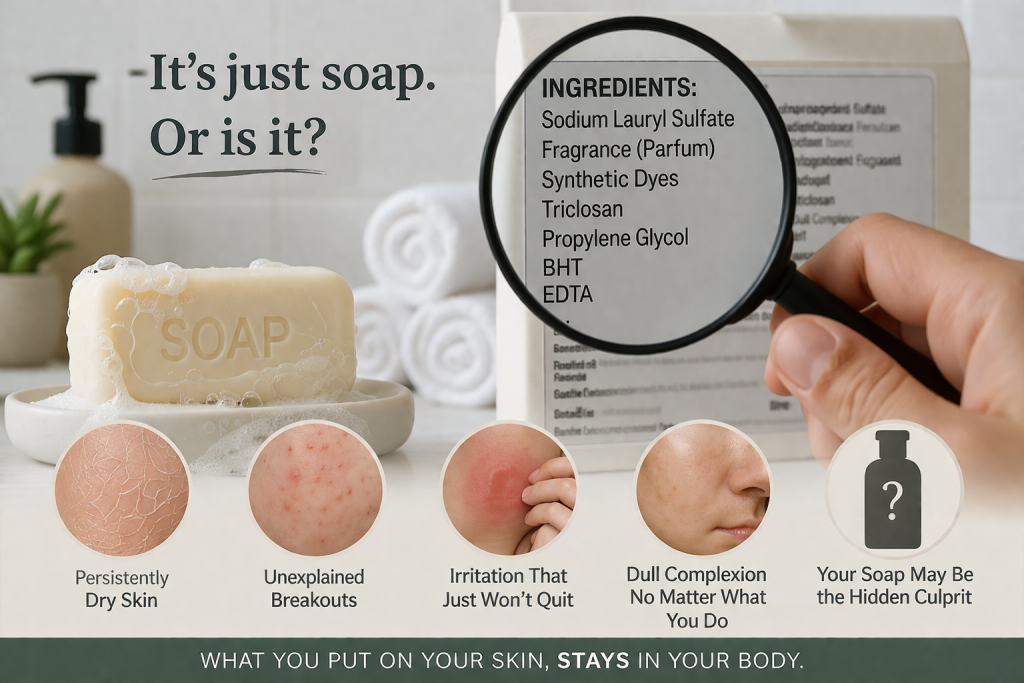
Most people never read the ingredient label on their soap. Why would they? It's soap. You lather up, rinse off, and get on with your day. But if you've ever experienced persistently dry skin, unexplained breakouts, irritation that just won't quit, or a complexion that feels dull no matter what you do — your soap may be a significant part of the problem.
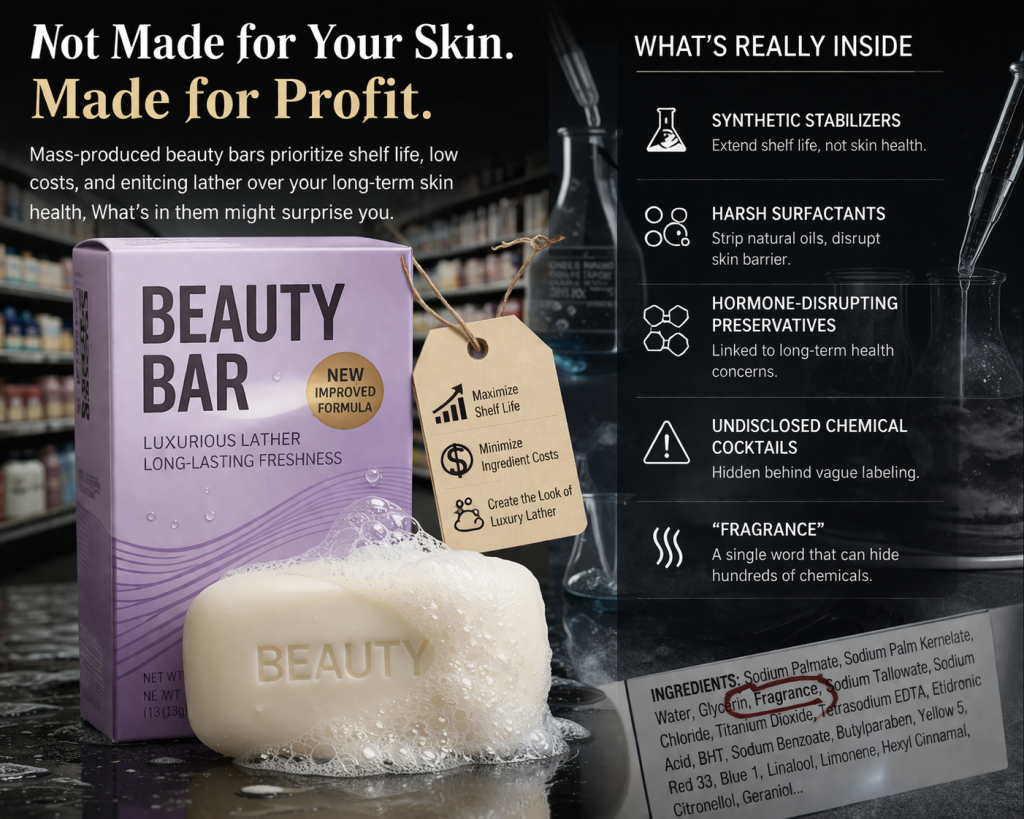
Mass-produced commercial beauty bars are formulated for one thing: profit. That means maximizing shelf life, minimizing ingredient costs, and creating the appearance of a luxurious lather — regardless of what those ingredients actually do to your skin over time. The result is a product packed with synthetic stabilizers, harsh surfactants, hormone-disrupting preservatives, and undisclosed chemical cocktails hiding behind a single word: "fragrance."
Today we're pulling back the curtain. Ingredient by ingredient.
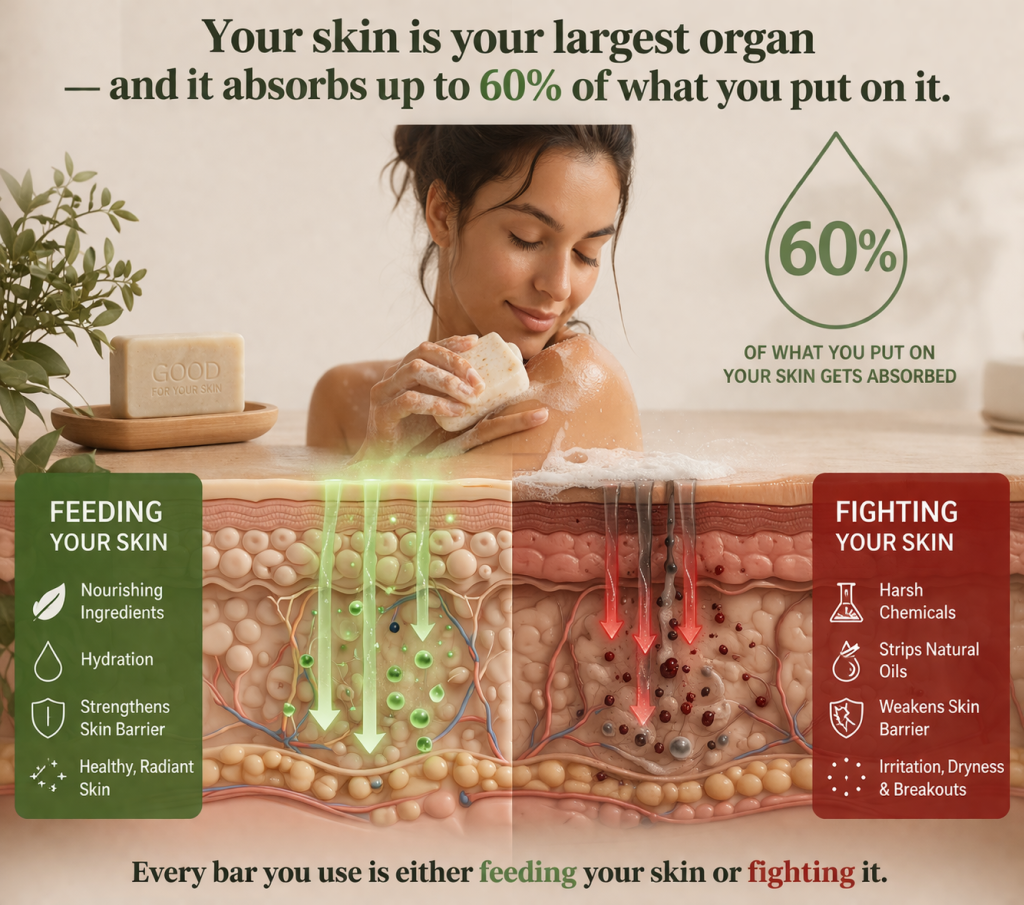
"Your skin is your largest organ — and it absorbs up to 60% of what you put on it. Every bar you use is either feeding your skin or fighting it."
Let's Start With EDTA
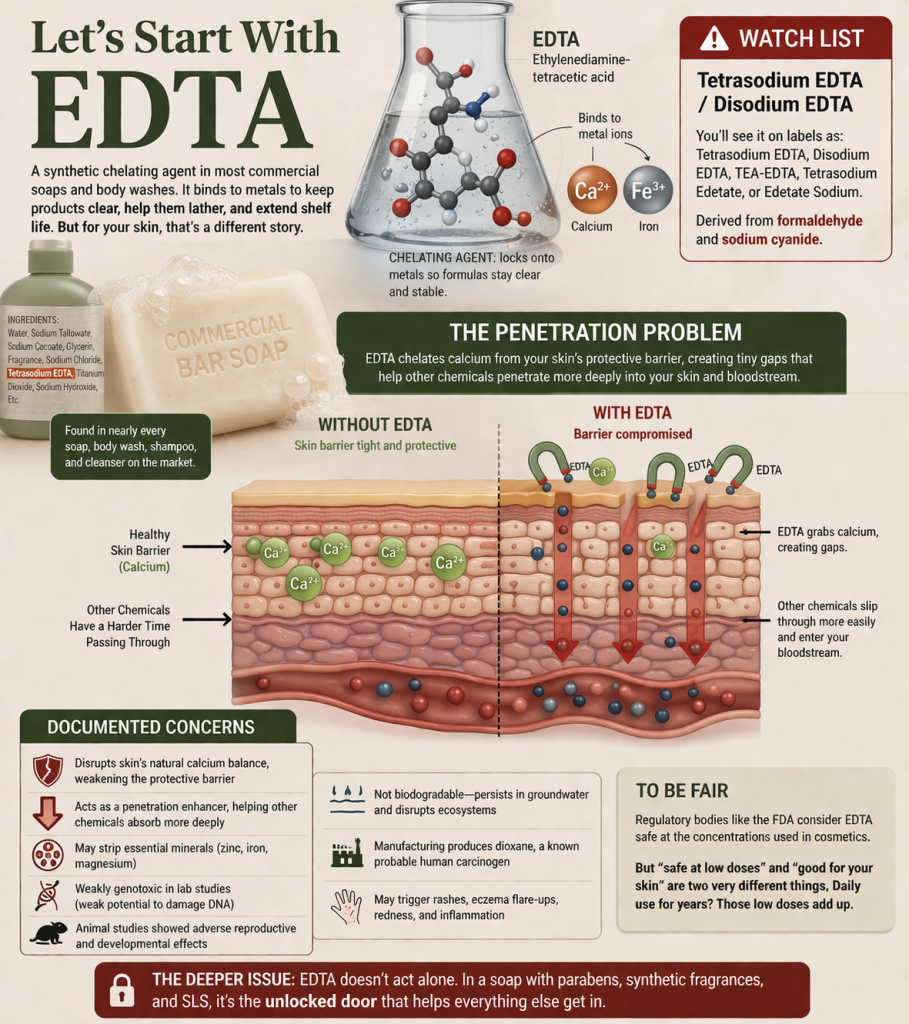
If you've picked up a commercial bar soap recently and squinted at the ingredient list, you've almost certainly seen it: Tetrasodium EDTA or Disodium EDTA. It's in nearly every mass-produced soap, body wash, shampoo, and cleanser on the market. And most people have absolutely no idea what it is or what it's doing.
EDTA — ethylenediaminetetraacetic acid — is a synthetic chelating agent. In plain English, it grabs onto metal ions like calcium and iron and binds to them, which prevents the product from going cloudy or separating over time. It also helps soap lather better in hard water and extends shelf life significantly. For a manufacturer filling warehouses and shipping products to sit on store shelves for 18 months, EDTA is very useful. For your skin? That's a different story.
Watch List
Tetrasodium EDTA / Disodium EDTA
A synthetic chelating agent derived from formaldehyde and sodium cyanide — yes, those substances — EDTA is used primarily to stabilize formulas and extend shelf life. It appears on labels as Tetrasodium EDTA, Disodium EDTA, TEA-EDTA, Tetrasodium Edetate, or Edetate Sodium.
The penetration problem: Research published by the Cosmetic Ingredient Review found that while EDTA itself has limited skin absorption, it functions as a penetration enhancer — meaning it chelates calcium from the skin's protective barrier, making it easier for other chemicals in the formula to pass through the skin and enter the bloodstream. In a clean, natural formula this would be irrelevant. In a commercial bar loaded with parabens, synthetic fragrances, and sulfates, this is a serious concern.
Documented concerns include:
- Disrupts the skin's natural calcium balance, potentially weakening the protective barrier with prolonged daily use
- Acts as a penetration enhancer, helping other potentially harmful chemicals absorb more deeply into the skin
- May strip essential minerals from the skin including zinc, iron, and magnesium
- Shown to be weakly genotoxic in laboratory studies (meaning it has weak potential to damage DNA)
- Animal studies using oral exposure showed adverse reproductive and developmental effects
- Not biodegradable — persists in groundwater and aquatic environments for years, disrupting ecosystems by binding to and mobilizing heavy metals from river sediments
- Manufacturing process produces dioxane as a byproduct — a known probable human carcinogen
- In sensitive individuals may trigger rashes, eczema flare-ups, redness, and inflammation
To be fair: regulatory bodies including the FDA consider EDTA safe at the concentrations used in cosmetics. But "safe at low doses" and "good for your skin" are two entirely different things. And when you're using a product every single day for years, those low doses add up.
Here is the deeper issue with EDTA that most people miss: it doesn't act alone. EDTA in a bar of soap that also contains parabens, synthetic fragrances, and SLS is far more concerning than EDTA in isolation — because it actively helps those other chemicals penetrate your skin more effectively. It's the unlocked door that lets everything else in.
The Ingredient That Was
Designed to Clean Garage Floors
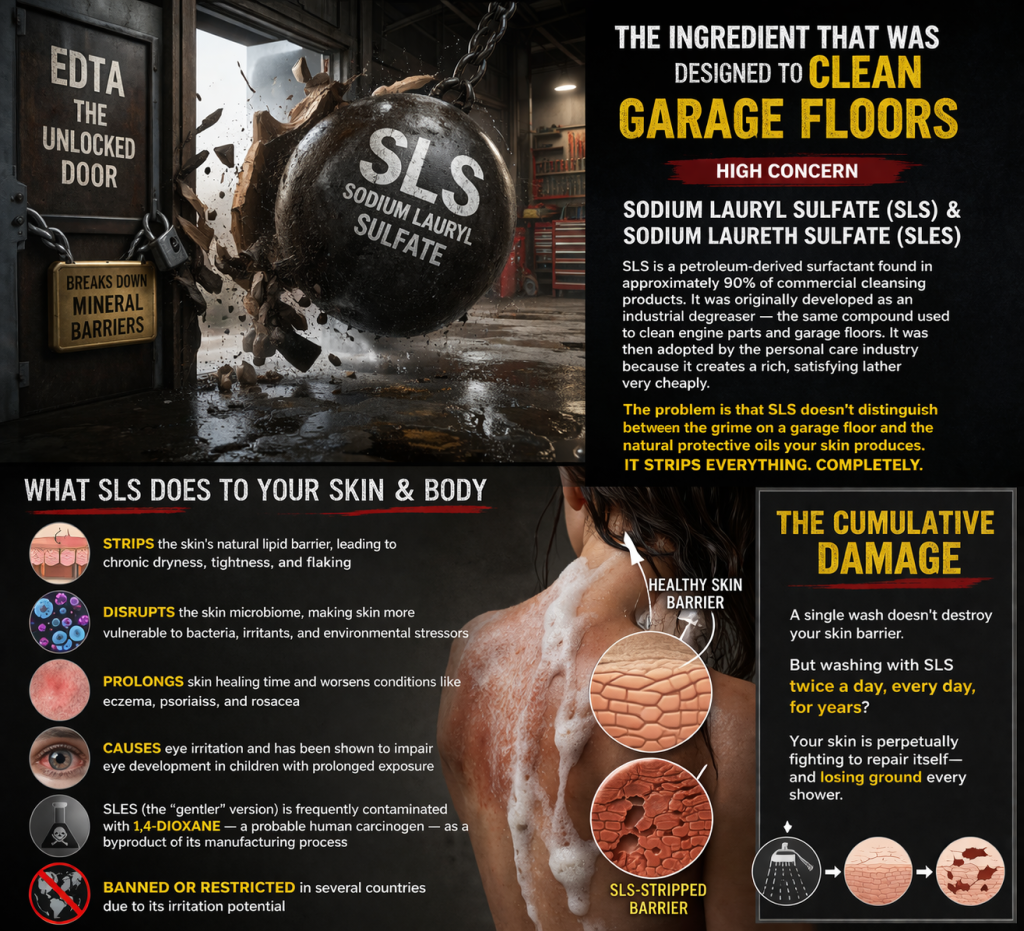
If EDTA is the unlocked door, Sodium Lauryl Sulfate — SLS — is the wrecking ball that comes through it.
High Concern
Sodium Lauryl Sulfate (SLS) & Sodium Laureth Sulfate (SLES)
SLS is a petroleum-derived surfactant found in approximately 90% of commercial cleansing products. It was originally developed as an industrial degreaser — the same compound used to clean engine parts and garage floors. It was then adopted by the personal care industry because it creates a rich, satisfying lather very cheaply.
The problem is that SLS doesn't distinguish between the grime on a garage floor and the natural protective oils your skin produces. It strips everything. Completely.
- Strips the skin's natural lipid barrier, leading to chronic dryness, tightness, and flaking
- Disrupts the skin microbiome, making skin more vulnerable to bacteria, irritants, and environmental stressors
- Prolongs skin healing time and worsens conditions like eczema, psoriasis, and rosacea
- Causes eye irritation and has been shown to impair eye development in children with prolonged exposure
- SLES (the "gentler" version) is frequently contaminated with 1,4-dioxane — a probable human carcinogen — as a byproduct of its manufacturing process
- Banned or restricted in several countries due to its irritation potential
What makes SLS particularly insidious in daily soap use is cumulative damage. A single wash doesn't destroy your skin barrier. But washing with SLS twice a day, every day, for years? Your skin is perpetually fighting to repair itself — and losing ground every shower.
The Preservatives That
Mimic Your Hormones
High Concern
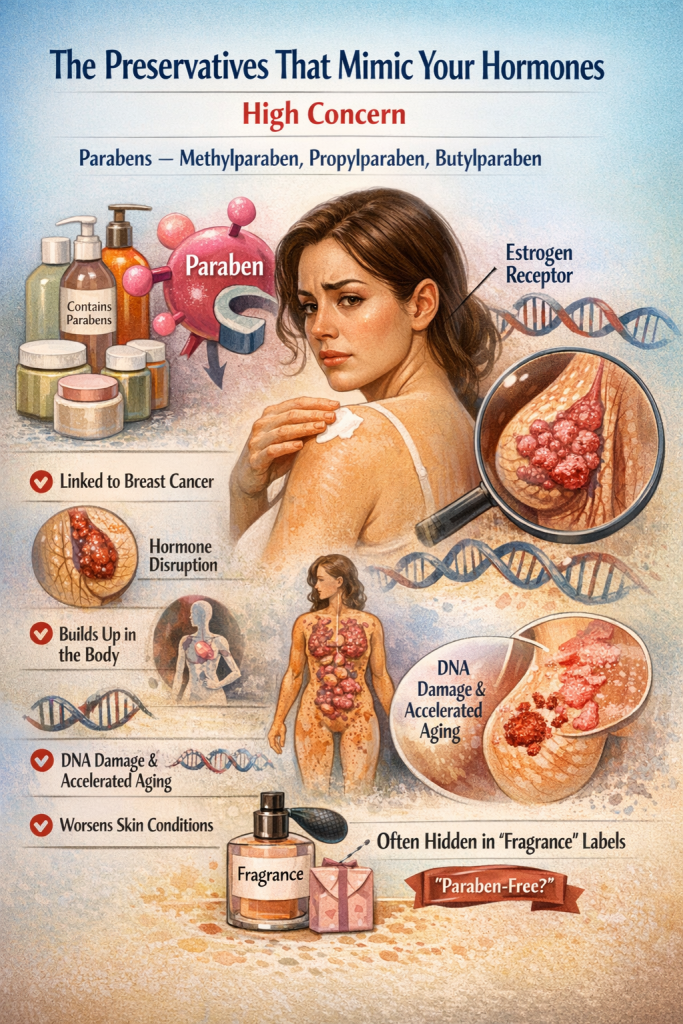
Parabens — Methylparaben, Propylparaben, Butylparaben
Parabens are synthetic preservatives used in commercial soaps, lotions, shampoos, and cosmetics to prevent the growth of bacteria, mold, and yeast — and to give products a shelf life that extends into years rather than weeks. They're cheap, effective, and used by virtually every major commercial soap manufacturer.
They're also estrogen mimics.
Parabens have been shown to penetrate the skin and behave like estrogen in the body — binding to estrogen receptors and triggering the same biological responses as the real hormone. This matters enormously in the context of long-term daily use because:
- Parabens have been detected in breast cancer tissue samples, raising significant concern about their role in cancer development
- Endocrine disruption from estrogen-mimicking chemicals is linked to hormonal imbalances, reproductive issues, and developmental problems
- Accumulate in body tissue with repeated daily exposure — they don't flush out easily
- Accelerate skin aging and have been shown to damage DNA when combined with UV exposure from sunlight
- Worsen pre-existing skin conditions including psoriasis, eczema, and contact dermatitis
- Several parabens have been banned or restricted by the European Union — yet remain permitted in US products
The particular cruelty of parabens is that they also hide inside "fragrance" — meaning a label can say "paraben-free" while still delivering parabens through an undisclosed fragrance blend.
The One Word That
Hides 3,000 Chemicals
Here is perhaps the most egregious ingredient deception in the entire personal care industry.
Major Concern
Fragrance / Parfum / "Natural Fragrance"
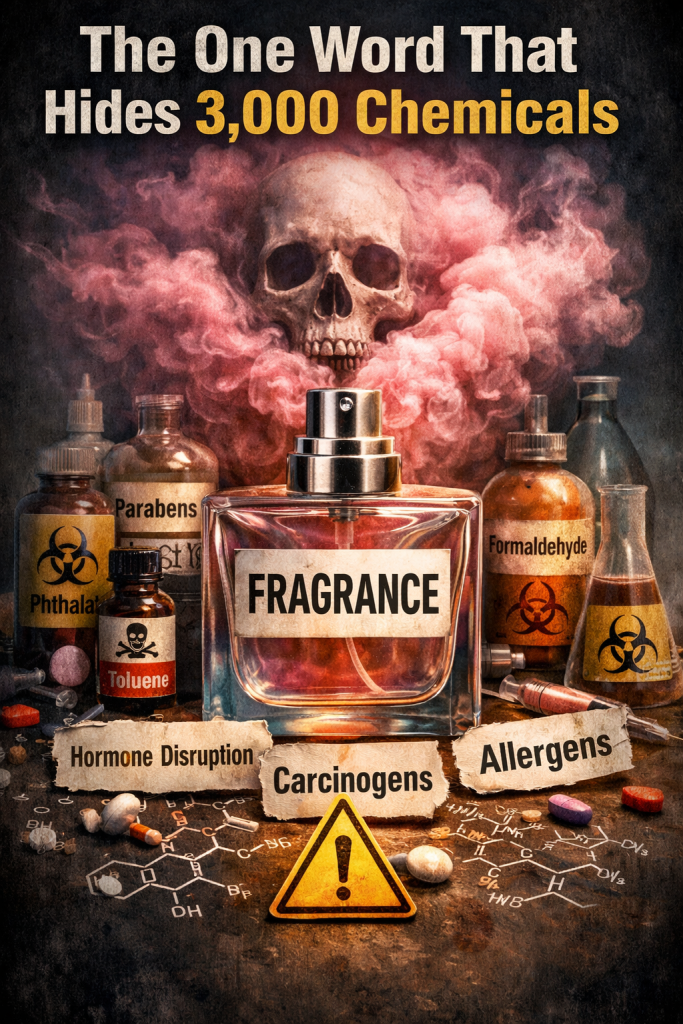
Under US law, companies are not required to disclose what's inside their "fragrance" — it's protected as a trade secret. A single ingredient listing of "Fragrance" or "Parfum" can legally contain any combination of over 3,000 permitted chemical compounds, none of which need to be individually disclosed to the consumer.
This single loophole allows manufacturers to hide parabens, phthalates, synthetic musks, formaldehyde-releasing compounds, and dozens of other concerning chemicals behind one innocent-sounding word on a label.
- Phthalates — endocrine disruptors linked to breast cancer, reproductive toxicity, premature puberty, lower IQ, ADHD, and eczema — are commonly used in synthetic fragrance blends
- Synthetic musks (Galaxolide, Tonalide) accumulate in body fat and breast milk and are linked to hormone disruption
- Toluene — also found in gasoline — can appear in fragrance formulations and is linked to central nervous system damage with frequent exposure
- Formaldehyde-releasing preservatives often hide inside "fragrance" designations
- "Fragrance" is rated a hazard level 8 out of 10 by the EWG's Skin Deep database — the highest concern category for allergenicity and systemic toxicity
- Causes contact dermatitis, respiratory irritation, hormonal disruption, and allergic reactions in a significant portion of the population
Even products labeled "natural fragrance" offer limited protection. The term has no regulated definition in the US and is regularly used to describe blends that are far from pure or transparent.
And Then There's the
Rest of the List
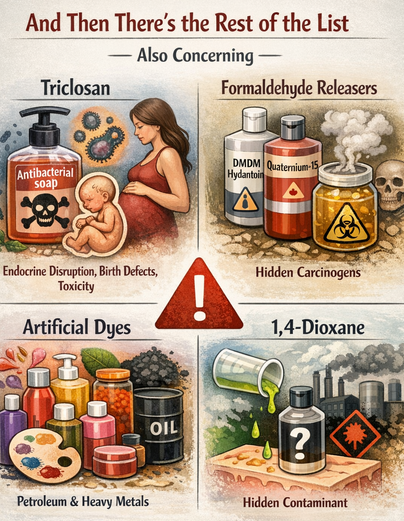
Also Concerning
Triclosan, Formaldehyde Releasers, Artificial Dyes, 1,4-Dioxane
Triclosan — an antibacterial compound used in many "antibacterial" soaps — has been shown to disrupt endocrine function, contribute to antibiotic resistance, and cause reproductive problems, birth defects, and organ toxicity. The FDA banned it from hand soaps in 2016 but it still appears in other products.
Formaldehyde-releasing preservatives such as DMDM Hydantoin and Quaternium-15 are used in commercial bars but don't have to be declared as formaldehyde — a known human carcinogen classified by the International Agency for Research on Cancer.
Artificial dyes and colorants are derived from petroleum and coal tar. They're added purely for aesthetics, serve no skin benefit, and are suspected carcinogens and known heavy metal carriers that absorb through the skin.
1,4-Dioxane is perhaps the most alarming of all because it's not even an ingredient — it's a contaminant produced during the manufacturing of SLES and certain other surfactants. It doesn't appear on any label because it's not intentionally added. Yet it's a probable human carcinogen that penetrates skin easily. It's been found in hundreds of mainstream personal care products in independent testing.
"The problem isn't that these chemicals exist. The problem is that you're putting them on your skin every single day — and nobody told you they were there."
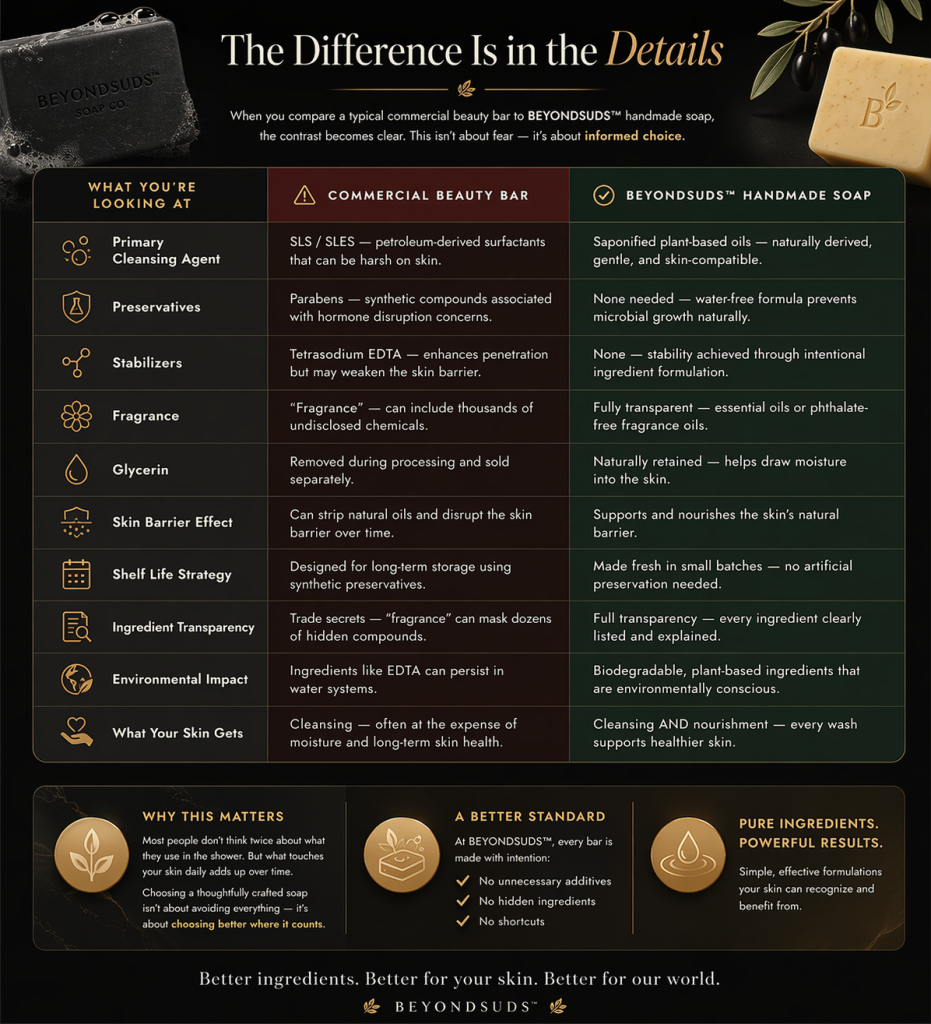
Commercial Bar vs.
Handmade Artisan Soap
Here is exactly what you're getting — and what you're trading away — when you choose a commercial beauty bar over a handcrafted soap made with real, traceable ingredients.
The Thing They Took Out
That Your Skin Desperately Needs
There's one more piece of this story that rarely gets told — and it might be the most important of all.
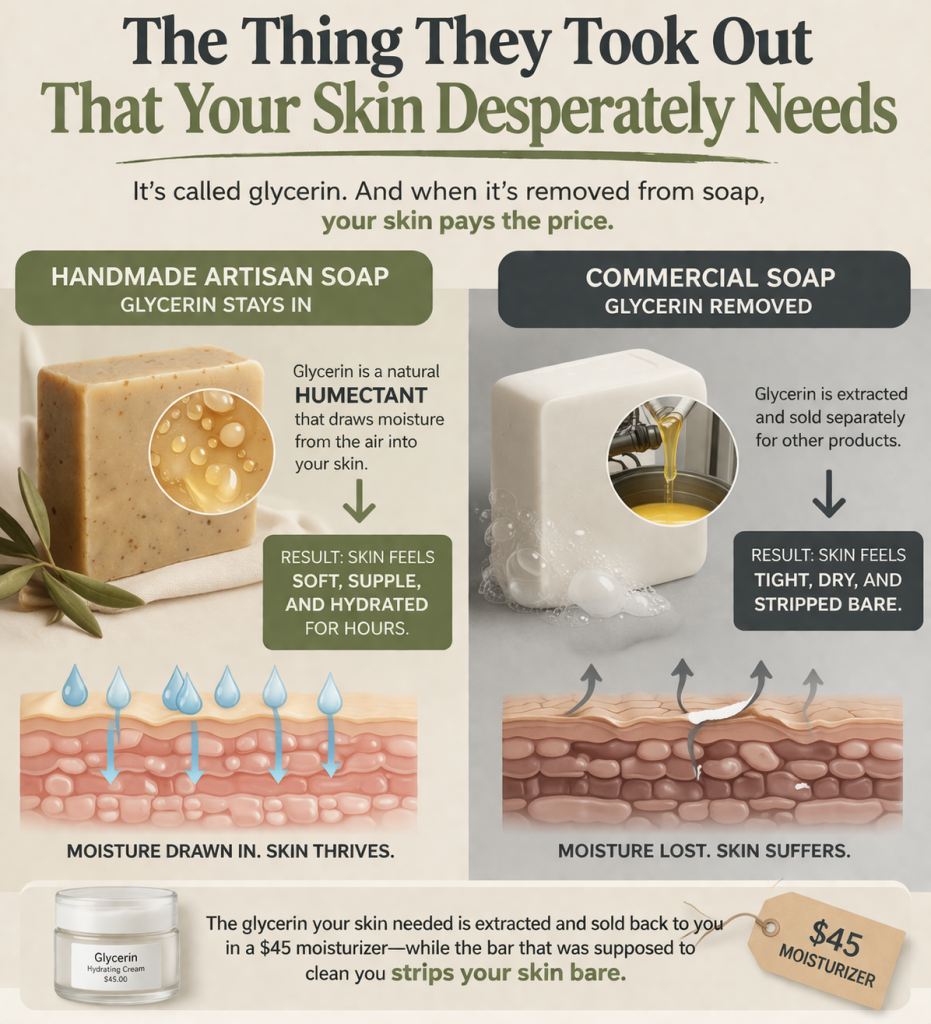
When soap is made through the traditional saponification process — combining oils or fats with lye — a byproduct is naturally produced: glycerin. Glycerin is a powerful humectant that draws moisture from the air into your skin, keeping it soft, supple, and hydrated for hours after washing.
In handmade artisan soap, glycerin stays in the bar. It's part of what makes real soap genuinely moisturizing rather than drying.
In commercial soap production, glycerin is deliberately removed from the formula and sold separately as a premium ingredient for high-end skincare products. The glycerin your skin needed is extracted and sold back to you in a $45 moisturizer — while the bar that was supposed to clean you strips your skin bare.
✓ What's Left in Every BEYONDSUDS™ Bar
Every BEYONDSUDS™ soap retains its naturally occurring glycerin — the same glycerin that the cold process saponification produces from our premium oils. It's one of the reasons customers consistently describe our bars as feeling moisturizing rather than drying. Your skin shouldn't feel worse after washing. It should feel better.
The BEYONDSUDS™ Difference
This Is What We Put In.
Nothing Else.
Every BEYONDSUDS™ soap is handcrafted in small batches in Troy, Ohio using only ingredients we would put on our own skin. No EDTA. No SLS. No SLES. No parabens. No phthalates. No synthetic stabilizers. No mystery fragrance cocktails. Every ingredient has a name, a purpose, and a proven benefit for your skin.
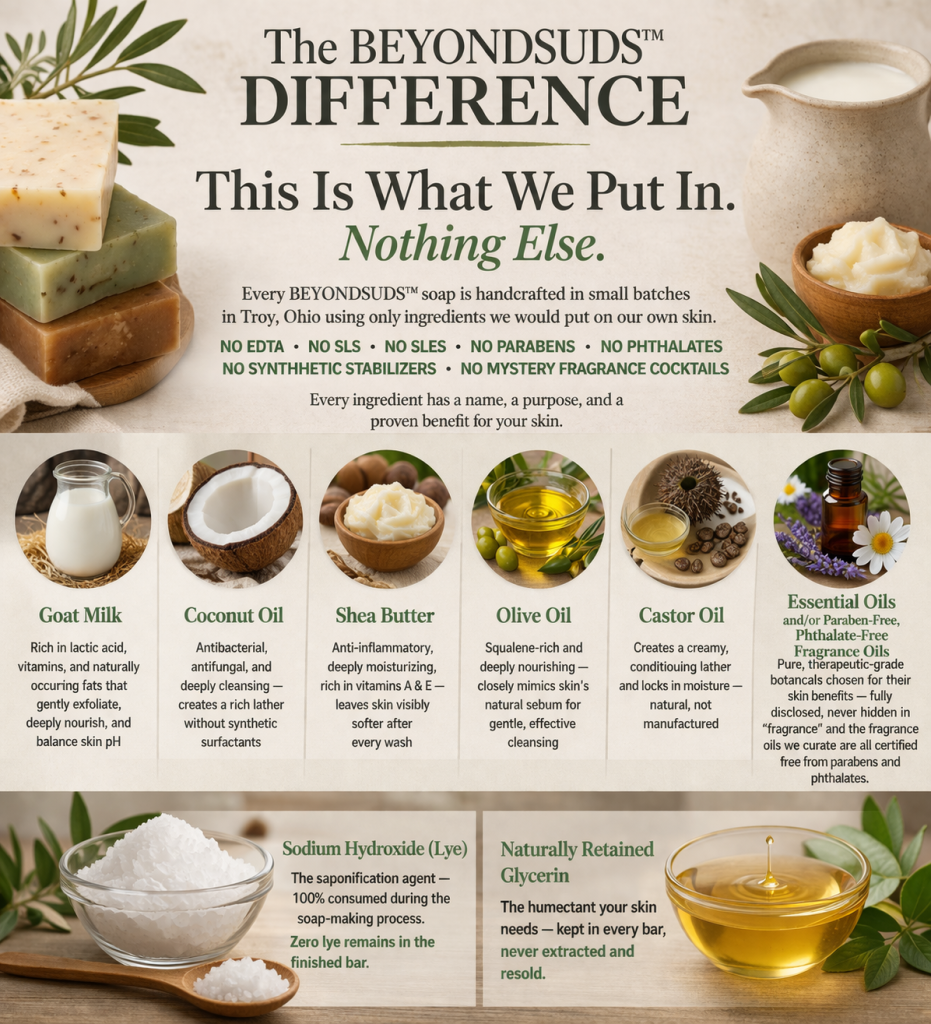
Goat Milk
Rich in lactic acid, vitamins, and naturally occurring fats that gently exfoliate, deeply nourish, and balance skin pH
Coconut Oil
Antibacterial, antifungal, and deeply cleansing — creates a rich lather without synthetic surfactants
Shea Butter
Anti-inflammatory, deeply moisturizing, rich in vitamins A & E — leaves skin visibly softer after every wash
Olive Oil
Squalene-rich and deeply nourishing — closely mimics skin's natural sebum for gentle, effective cleansing
Castor Oil
Creates a creamy, conditioning lather and locks in moisture — natural, not manufactured
Essential Oils and or Paraben-Free, Phthalate-Free Fragrance Oils.
Pure, therapeutic-grade botanicals chosen for their skin benefits — fully disclosed, never hidden in "fragrance" and the fragrance oils we curate are all certified free from parabens and phthalates.
Sodium Hydroxide (Lye)
The saponification agent — 100% consumed during the soap-making process. Zero lye remains in the finished bar.
Naturally Retained Glycerin
The humectant your skin needs — kept in every bar, never extracted and resold
The Choice Is
Yours to Make
We want to be clear about something: we are not scientists, and this post is not a medical document. Regulatory bodies consider many of the ingredients discussed here safe at the concentrations used in cosmetics. We are not telling you that a single shower with a commercial bar will harm you.
What we are saying — based on peer-reviewed research, dermatological studies, and a decade of formulation experience — is that what goes on your skin every single day matters. Cumulative exposure to synthetic chemicals, penetration enhancers, hormone mimics, and undisclosed fragrance compounds has an effect. That effect compounds over years and decades of daily use.
You have a choice every time you step into the shower. You can reach for a bar that was formulated to last 18 months on a warehouse shelf, lather impressively, and cost $4 to produce at scale. Or you can reach for something made by a real person, with real ingredients, for the real benefit of your skin.
We make the second kind. We always will.
Because your skin is worth more than what's in that commercial bar.
LOVE❤️YOUR SKIN.™
— Bubbles, BEYONDSUDS™

Experience the Difference.
Handcrafted in small batches. Organic and natural ingredients. Zero EDTA, SLS, parabens or phthalates. Ever. Give your skin what it's been missing.
Disclaimer: This blog post is intended for educational and informational purposes only. The information provided reflects publicly available research and BEYONDSUDS™'s personal formulation philosophy. It is not intended to constitute medical advice, diagnosis, or treatment. Many of the ingredients discussed are considered safe by regulatory bodies including the FDA and the Cosmetic Ingredient Review Expert Panel at the concentrations used in cosmetic products. Individual sensitivities vary. If you have a skin condition, allergy, or health concern, please consult a qualified dermatologist or healthcare provider before changing your skincare routine.
LOVE❤️YOUR SKIN.™